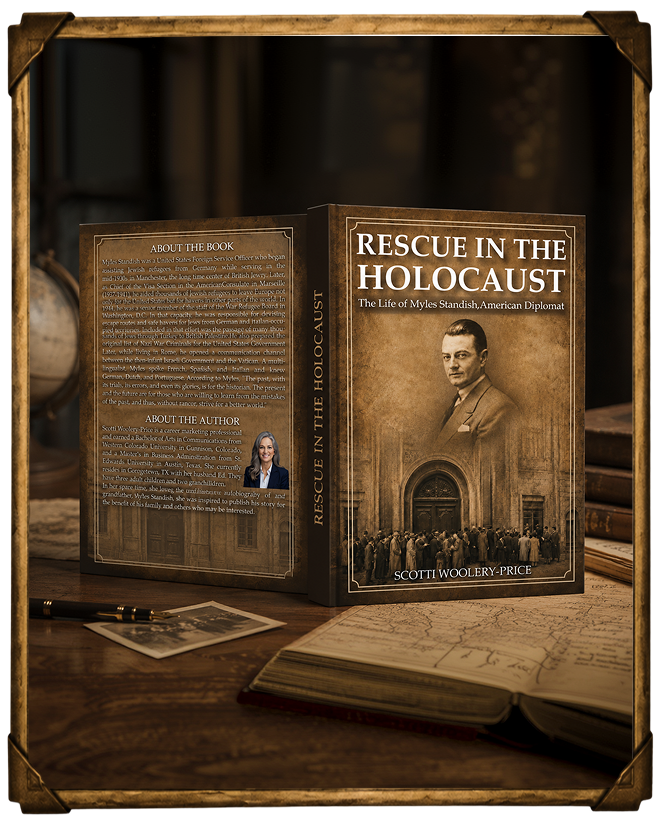
Marseille, 1940. A young American diplomat sat behind a desk with a line of refugees stretching around the block, and a government telling him to slow down. This is the true story of what he did instead.
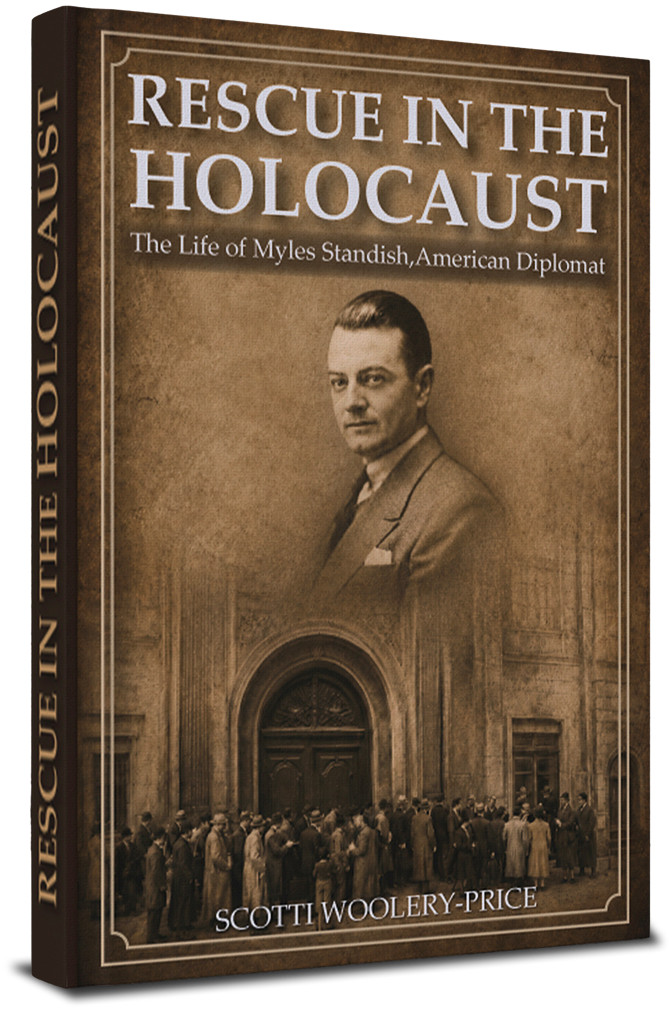
Rescue in the Holocaust is the true account of Myles Standish, Chief of the Visa Section at the American Consulate in Marseille, who, alongside his colleague Harry Bingham IV, issued thousands of visas and travel documents to refugees stripped of their citizenship by the Nazi regime, in direct defiance of orders from Washington.
Working against a State Department instructionto slow refugee immigration to a crawl, Standish and his small team issued approximately 8,500 visas and 2,500 Affidavits in Lieu of Passport in a single year, more than any other American consulate in France, and quite possibly in all of Europe. He worked alongside Varian Fry's Emergency Rescue Committee to spirit endangered artists and intellectuals out of the country. He hid refugees in the boot of his own car on the back roads to Spain. He walked into the internment camps himself and signed the papers no one else would.
It cost him his career. The State Department never rehired him. He was rarely thanked, and he never asked to be.
Drawing on personal papers, State Department and War Refugee Board archives, survivor testimony, and interviews with the Standish family, Rescue in the Holocaust is not a story about a saint. It's the story of a complicated, opinionated, deeply human man who looked at what the rules allowed, decided it wasn't enough, and did something about it anyway, and about what that choice still means today.
Inside the Book
Why This Story Matters Now
Myles Standish is not as well-known as Varian Fry or Raoul Wallenberg. He never sought recognition, and for most of the last eighty years, history nearly forgot him along with it. But the record of what he did, preserved in archives, family letters, and the memories of the families he helped save, tells a story that belongs in the world.
This is a book about the courage of the desk: not the courage of the battlefield, but the quieter, harder courage of looking at the person standing in front of you and finding a way to give them what the rules said you couldn’t. It's a reminder that history isn't only made by armies and governments. Sometimes it's made by one ordinary, imperfect person who decides not to look away.
Discover the man behind the stamp.
A Desk. A Line. A Choice.
He was never famous for it. He never asked to be. Read the story the State Department tried to forget, and the family that spent years making sure it wouldn't.
"I picked this up expecting a history lesson and got something closer to a gut-punch. By chapter three I'd forgotten I was reading nonfiction; I just wanted to know what happened to the people in that line."
Mary Paul
owner
"What got me wasn't the heroism, it was the cost. This isn't a book about a man who did the right thing easily. It's about what it took out of him to do it at all."
Sarah Phill
owner
"I've read a lot of WWII history, and I'd never heard Myles Standish's name before this book. That alone tells you something. It shouldn't have taken this long for his story to surface."